
Gaza: The Unspoken Truth About What America Enables — Is America Better Yet?
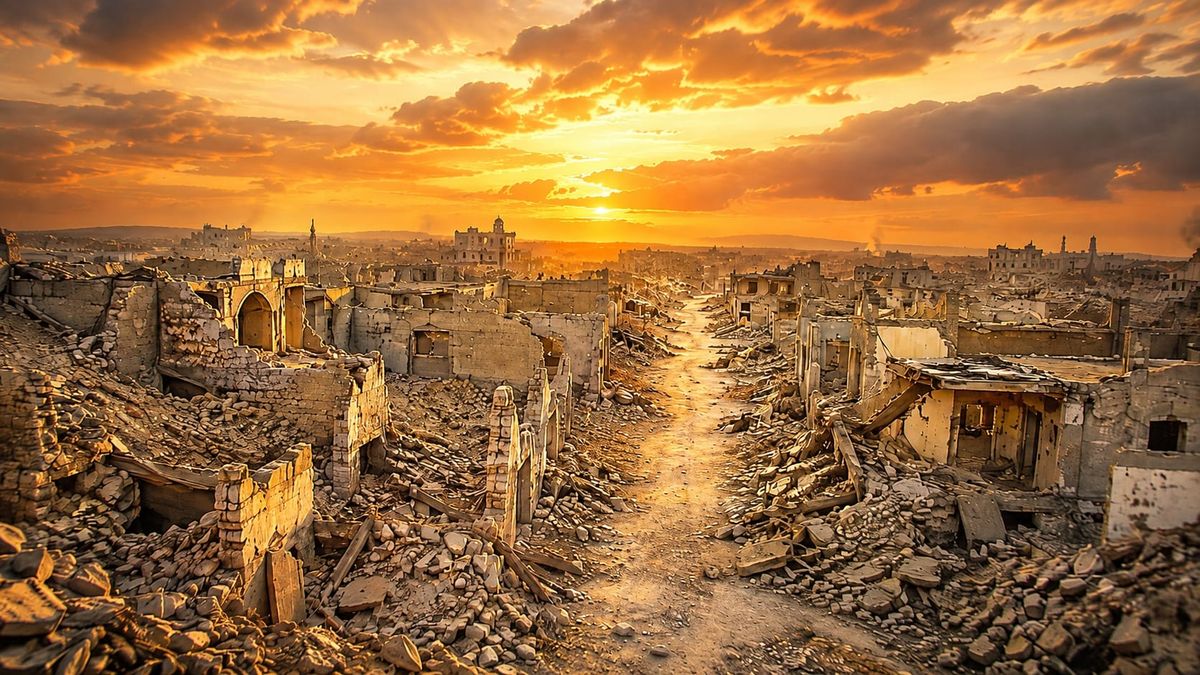
Gaza: The Unspoken Truth About What America Enables — Is America Better Yet?
By Roberto Zapatero
Independent Forensic Investigative Journalist
Is America Better Yet?
9/11 cannot be erased. Neither can October 7.
Some dates become more than dates.
9/11 is one of them.
Americans do not need the year attached. We know what it means. We remember where we were. We remember the smoke, the people jumping from buildings, the firefighters walking toward something everyone else was fleeing.
We remember the people.
October 7 deserves the same clarity.
On October 7, 2023, Hamas-led attackers crossed into Israel, killed about 1,200 people, most of them civilians, and took hostages into Gaza. The massacre included people killed in their homes, communities and at a music festival.
October 7 cannot be erased.
It cannot be excused by what came before it.
And what happened afterward cannot be erased by October 7.
That is where this story begins.
Biden made the 9/11 comparison
When President Joe Biden traveled to Israel on October 18, 2023, he reached for the event Americans understood instinctively.
9/11.
Biden said that although October 7 had been described as Israel's 9/11, Israel's much smaller population made the attack comparable to “fifteen 9/11s.”
That distinction matters.
Biden was not saying fifteen times as many people had been killed. He was comparing the scale of the trauma relative to the size of Israel's population.
That was an attempt to make Americans understand what Israelis had experienced.
We should remember it.
But we should also keep counting.
Now count Gaza
The National September 11 Memorial & Museum records 2,977 people killed in the September 11 attacks.
As of August 12, 2026, UNRWA, citing the Health Cluster, reported 73,386 Palestinians killed in Gaza and 174,256 injured since October 2023.
Those figures originate with Gaza health authorities and should be described that way. OCHA likewise cautions that casualty figures not independently verified by the United Nations are attributed to their source.
But the arithmetic itself is simple.
73,386 divided by 2,977 is about 24.6.
So if we compare deaths only, without adjusting for population, Gaza's reported death toll is equivalent to roughly twenty-four and a half 9/11 death tolls.
Not six.
Not seven.
Nearly twenty-five.
That is not the same calculation Biden used. His comparison was population-adjusted. Mixing those two methods would produce a misleading number.
So we will not do that.
The raw comparison is devastating enough.
But numbers are not people
A death toll becomes dangerous when it turns human beings into arithmetic.
Seventy-three thousand can become a number too large for the mind to hold.
So reduce it.
One house.
One family.
A mother.
A father.
A child who had a bed, a school, a favorite meal, a friend, a place at the table.
Then another.
And another.
And another.
The destruction is not limited to the people who died.
UNRWA reported in August that about 82 percent of Gaza's structures had been damaged, more than 200,000 structures to some degree.
Those structures were not simply concrete.
They were homes.
Schools.
Stores.
Clinics.
Places where children grew up.
Places where families kept photographs.
Places where people expected to return at the end of the day.
War does not only take what people own.
It takes who they love.
That is the part statistics struggle to show.
The killing did not completely stop with the ceasefire
A ceasefire took effect on October 10, 2025.
Yet OCHA reported on August 14 that Gaza's Ministry of Health had recorded 1,259 Palestinians killed since the ceasefire was announced, along with more than 4,100 injuries.
That does not mean every death occurred under identical circumstances or that every reported casualty can automatically be attributed legally to one side.
It does mean this:
The dying did not simply end when the word ceasefire appeared in the headlines.
Where America enters the story
This is not only a story about Israel and Palestinians.
It is an American story.
The United States and Israel have one of the closest military relationships in the world.
In 2016, the two governments signed a 10-year agreement committing the United States to $38 billion in military assistance, including $3.3 billion a year in foreign military financing and $500 million a year for missile defense.
That agreement alone does not establish that a particular bomb dropped in Gaza was American, that Washington approved a particular Israeli strike, or that the United States controls Israeli military decisions.
Those are separate questions requiring separate evidence.
But America is not merely watching from another continent.
It supplies money, weapons and military support to Israel.
That gives the United States both influence and responsibility for asking what its support helps sustain.
The relationship now reaches beyond Gaza
The connection between the two countries is even more visible in the wider Middle East.
In 2026, the United States launched Operation Epic Fury against Iran. The White House described the campaign as being conducted with regional partners, while the State Department's own legal analysis describes the continuing armed conflict involving Israel and Iran. U.S. military strikes against Iran continued during the summer.
The evidence supports saying that the United States and Israel are deeply intertwined military partners and have participated in the same broader conflict against Iran.
It does not establish the more subjective claim that America simply obeys Israel.
Some critics see U.S. policy as dangerously deferential to the Israeli government.
Supporters see the relationship as a vital alliance against common threats.
Those are arguments.
The military relationship itself is fact.
And Americans have every right to examine what is being done in their name, with their government's money, weapons, diplomacy and military power.
October 7 does not disappear because Gaza suffered
There is a trap here.
People are often asked to choose which suffering they are permitted to recognize.
Condemn Hamas, and someone assumes you support everything Israel has done.
Condemn the devastation in Gaza, and someone assumes you are excusing October 7.
That is a false choice.
October 7 was an atrocity.
The people murdered that day do not become less dead because Palestinians later suffered.
The hostages do not become less important.
Their families do not lose their grief.
And Palestinian civilians do not become less human because Hamas committed those crimes.
Justice that requires us to forget one group of victims in order to remember another is not justice.
9/11 cannot be erased.
Neither can October 7.
Neither can Gaza.
Americans understood after September 11 that there are moments a country never completely leaves behind.
President Biden explicitly invoked that memory when he tried to explain October 7 to Americans.
We should take that comparison seriously.
All the way.
Remember the murdered Israelis.
Remember the hostages and their families.
Remember the Palestinians who were killed.
Remember the people who survived and returned to neighborhoods that no longer looked like neighborhoods.
Remember that behind every number is somebody who was expected home.
And then ask the question that belongs to us:
What responsibility does the United States carry for what its money, weapons, diplomacy and military partnerships make possible?
That question is not anti-Israel.
It is not pro-Hamas.
It is not a demand that Americans choose whose children matter.
It is a demand for accountability.
We have spent much of our time focusing on politics inside this country.
We need to focus on U.S. politics internationally.
And I cannot think of a better example to start with.
Sources
American Presidency Project — President Joe Biden, remarks in Tel Aviv following the Hamas attacks, October 18, 2023. Biden described October 7, relative to Israel's population, as comparable to fifteen 9/11 attacks.
National September 11 Memorial & Museum — September 11 commemoration and casualty record: 2,977 people killed in the September 11, 2001 attacks.
UNRWA, Situation Report #232 — August 12, 2026. Citing the Health Cluster: 73,386 Palestinians reported killed and 174,256 injured in Gaza.
United Nations Office for the Coordination of Humanitarian Affairs (OCHA) — Reported Impact Snapshot, Gaza Strip, August 12, 2026. OCHA explains the sourcing and verification status of casualty figures.
OCHA Humanitarian Situation Report — August 14, 2026. Reported casualties following the October 10, 2025 ceasefire agreement.
UNRWA — August 2026 reporting that roughly 82 percent of Gaza's structures had been damaged.
U.S. Department of State — 2016 U.S.-Israel Memorandum of Understanding providing $38 billion in military assistance over 10 years.
The White House — Operation Epic Fury announcement, March 1, 2026.
U.S. Department of State, Office of the Legal Adviser — Operation Epic Fury and International Law, April 21, 2026.
Associated Press — July 19, 2026 reporting on continuing U.S. military strikes against Iran.
**I write for you,**
— Roberto
isamericabetteryet.org