
THE CAMERA WAS RIGHT. THE ACCUSATION WAS WRONG - Is America Better Yet?
A Flock camera correctly recorded Chrisanna Elser’s truck in a Colorado town. Police treated that limited fact as proof of a package theft, forcing her to assemble video and GPS records to clear herself.
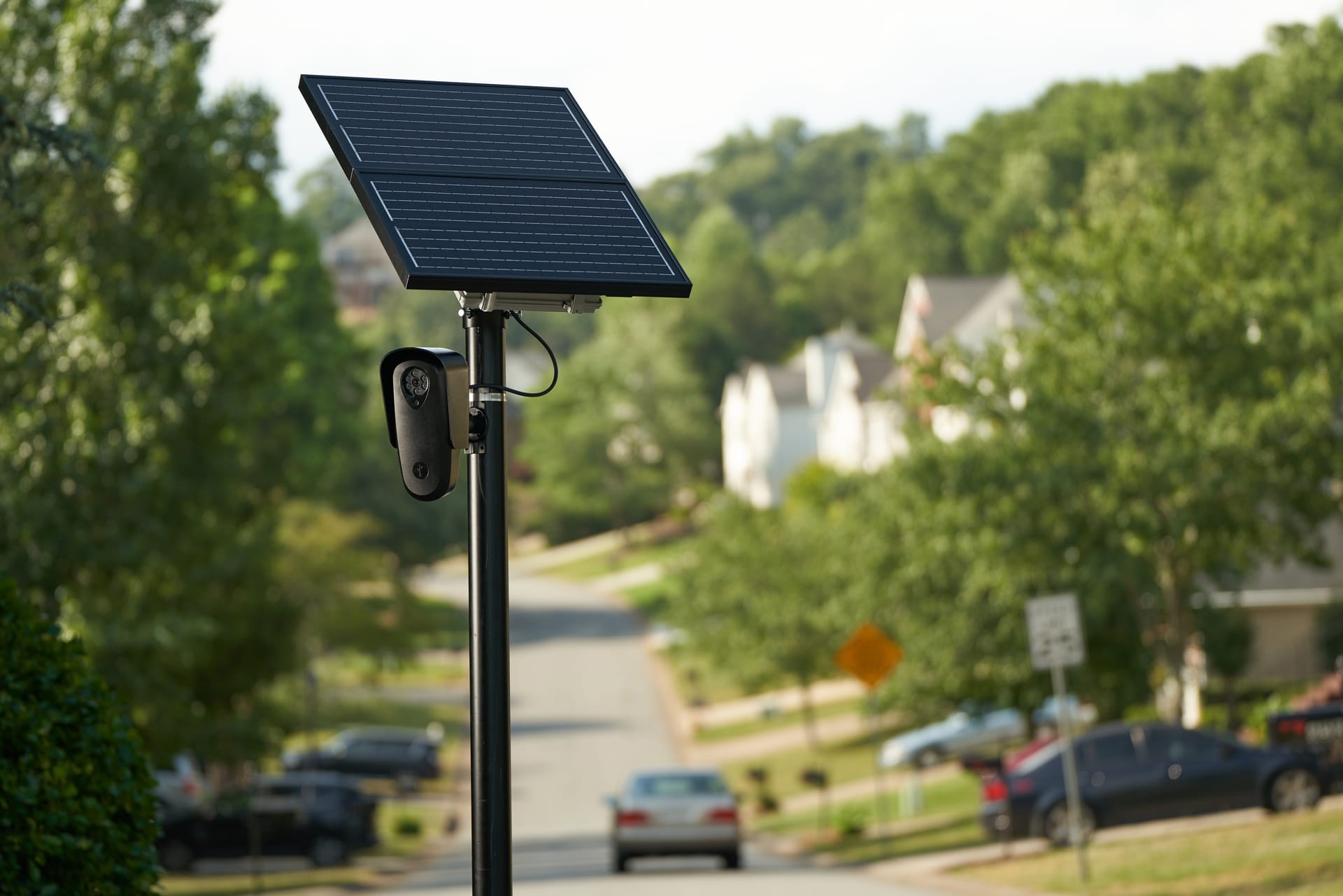
/H2 A Flock reader placed Chrisanna Elser’s truck inside a Colorado town. A police officer treated that fact as proof of a $25 theft—and she had to build her own case to clear her name.
By Roberto Zapatero
Is America Better Yet?
Surveillance Series Case Study — July 28, 2026
When Sgt. Jamie Milliman arrived at Chrisanna Elser’s Denver home, he did not appear uncertain.
The Columbine Valley police officer told Elser that surveillance cameras had recorded her truck entering and leaving the nearby town of Bow Mar during the period when a package was stolen from a resident’s porch.
“You can’t get a breath of fresh air in or out of that place without us knowing,” he told her.
Milliman said Flock Safety cameras had recorded Elser’s green Rivian in the town between 11:52 a.m. and 12:09 p.m. on September 22, 2025. He also claimed that a resident’s doorbell video showed her taking the package. When Elser denied the accusation and offered to show him footage from her vehicle, he refused to review it and issued her a summons for petty theft.
The surveillance system had correctly recorded her truck.
What it did not prove was that she had stolen anything.
WHAT THE CAMERA ESTABLISHED
The Flock records established that Elser’s vehicle passed through Bow Mar during the approximate period in which the package disappeared.
They did not establish that:
- Elser stopped near the victim’s home.
- Elser approached the porch.
- Elser took the package.
- The person recorded by the doorbell camera entered her truck.
- Elser was even visible in the Flock images.
The police chief later acknowledged that the cameras could not show the people inside a vehicle. Their investigative value was limited to showing that a particular vehicle had been recorded at a particular location and time.
That distinction was lost during the accusation.
The technology produced a precise time, location and vehicle image. Those details gave circumstantial evidence the appearance of certainty. An officer then connected the recorded vehicle to a different image of an unidentified person and treated the conclusion as settled.
The camera did not make that decision.
A person did.
PROVING WHERE SHE HAD BEEN
Elser had driven through Bow Mar that day. She was going to a noon appointment with a tailor more than a quarter-mile from the house where the package was taken.
After receiving the summons, she began assembling evidence:
- Surveillance images from the tailor.
- Video recorded by her Rivian.
- GPS records from the truck.
- Location information stored by her phone.
- Statements from people she encountered.
- Images documenting what she had been wearing.
- The victim’s doorbell footage, which was later posted online.
The vehicle footage showed her making two trips through the town without stopping. The GPS information placed her away from the victim’s property. The porch video did not show the person entering a truck, and Elser said the person’s appearance and clothing did not match her.
She repeatedly attempted to get police and town officials to examine what she had collected.
On October 11, Elser sent the evidence directly to Police Chief Bret Cottrell. Four days later, he notified her that the summons had been voided.
She had been accused by the government.
She was then required, in practice, to conduct the investigation that cleared her.
THE SYSTEM DID NOT MISREAD HER LICENSE PLATE
This case should not be reported as a simple technological error.
There is no indication that the Flock system misread Elser’s plate or recorded the wrong vehicle. The system appears to have accurately documented her truck passing through Bow Mar.
The failure occurred when limited location evidence was treated as proof of identity and criminal conduct.
That distinction matters.
A malfunctioning camera can sometimes be repaired. A system that produces accurate but incomplete information creates a different risk: investigators may place too much confidence in what the technology establishes and too little attention on what it does not establish.
The presence of a vehicle within a town is not proof that its owner committed every offense reported during that period.
A database search may produce a lead. It does not eliminate the need to test that lead against the remaining evidence.
A NETWORK THAT RECORDS EVERY VEHICLE
Flock’s automated license-plate readers do not activate only when a wanted vehicle passes.
They photograph vehicles traveling through their field of view and record vehicle characteristics, the camera location, and a date and time. Flock says most communities retain that information for 30 days before automatic deletion. Agencies control access and may choose whether to share their information with other participating departments. Every search is supposed to be associated with an authorized user and recorded in an audit log.
Flock argues that the system helps investigators solve violent crimes, locate missing people and follow cases that cross jurisdictional boundaries. The company says searches must have a legitimate public-safety purpose and that audit records make improper use reviewable.
Those safeguards depend heavily on the agencies using them.
InvestigateTV reported that Dunwoody, Georgia, shared its Flock information with more than 1,000 outside agencies. A resident examining limited records said outside agencies conducted more than 11.7 million searches of Dunwoody data during one year. When he requested a complete month of audit information, the city reportedly estimated the cost at more than $500,000.
A system may technically be auditable while remaining practically difficult for the public to audit.
DOES FLOCK “TRACK” PEOPLE?
Flock distinguishes between recording isolated sightings and tracking the whole of someone’s movements.
Its license-plate readers capture vehicles at individual camera locations rather than continuously following one car. Flock therefore rejects the description of its ALPR system as tracking people or vehicles.
InvestigateTV found that Flock’s own training materials nevertheless describe officers tracking vehicles “from location to location,” including across state lines. The company’s Condor pan-tilt-zoom cameras can also use artificial intelligence to detect and follow pedestrians while they remain within a camera’s range.
The disagreement partly depends on how the word tracking is defined.
One camera records one point.
A connected network of cameras records many points.
A searchable sequence of those points can reveal where a vehicle traveled, when it arrived, when it left and which jurisdictions it crossed. The system does not need to attach a physical GPS device to a car to reconstruct parts of its movement.
That capability is what gives the network its investigative value.
It is also what gives the network its surveillance power.
FLOCK’S RESPONSE
Flock Chief Communications Officer Josh Thomas told InvestigateTV that the company was not responsible for the officer’s use of the system in Elser’s case.
He described what happened as police misuse and said the tools were not designed to be used that way. Flock’s position is that local agencies own the information, establish access rules and bear responsibility for regulating how their officers use it.
InvestigateTV reported that Milliman was reprimanded but remained with the department. Neither Milliman nor Cottrell responded to that outlet’s requests for comment. The precise contents of the reprimand and any resulting policy changes have not been publicly detailed in the reporting reviewed by Is America Better Yet?
WHAT THE EVIDENCE DOES NOT ESTABLISH
The available evidence does not establish that:
- Flock personnel directed the accusation against Elser.
- The system falsely recorded her vehicle.
- Every Flock search is improper.
- Automated license-plate readers have no legitimate investigative uses.
- The officer deliberately accused someone he knew was innocent.
- A court has ruled that the search or accusation violated Elser’s constitutional rights.
The evidence does establish that an officer relied heavily on Flock location data, refused to examine evidence Elser offered, issued a summons, and expressed complete certainty before she assembled the records that caused the department to withdraw the accusation.
QUESTIONS THAT REMAIN UNANSWERED
The Columbine Valley Police Department has not publicly explained:
- What evidence was reviewed before the summons was issued.
- Whether anyone compared Elser’s appearance with the person in the porch video.
- Whether a supervisor approved the accusation.
- What departmental standard governs historical Flock searches.
- Whether the officer’s actions complied with written policy.
- What the reprimand required.
- Whether additional training or safeguards were imposed.
- Whether other people have been accused through similar searches.
- Who ultimately stole the package.
Those questions matter because the incident was not discovered through an internal audit of the Flock system.
It became public because Elser had her own cameras, retained her electronic history, persisted in challenging the accusation and shared the evidence with reporters.
THE PEOPLE WHO CANNOT BUILD THEIR OWN DEFENSE
Elser had unusual resources available to her.
Her vehicle recorded video. Her truck and phone preserved location data. A business had surveillance footage. She understood the professional danger of leaving the accusation unanswered, and she had the ability to spend days assembling a detailed file.
Many people do not have those advantages.
They may drive older vehicles without cameras. They may disable location tracking for privacy. They may lack legal assistance, technical knowledge, transportation, time away from work or the confidence to keep demanding that officials examine contradictory evidence.
The central danger revealed by this case is not that every camera observation is false.
It is that a correct observation can be mistaken for a complete answer.
HOW THIS EXTENDS OUR SURVEILLANCE SERIES
Is America Better Yet? has documented the growth of interconnected surveillance systems: license-plate readers, police databases, privately operated camera networks, cross-jurisdictional access and technologies sold as narrowly focused tools that can later support much broader searches.
Chrisanna Elser’s experience supplies the human consequence.
The network recorded an ordinary person who was not under suspicion when she entered the town. Investigators searched the stored record only after a crime was reported. Her presence became a lead. The lead became an accusation. The accusation became a summons.
Then the burden moved to her.
The most important fact is not that the camera was wrong.
It is that the camera was right about one limited detail—and that limited detail was allowed to carry far more weight than it could support.
A surveillance system does not have to malfunction to harm an innocent person.
It only has to be believed without enough investigation.
FACTS AT A GLANCE
Confirmed: Flock cameras recorded Elser’s vehicle traveling through Bow Mar during the general period of a package theft.
Confirmed: Sgt. Jamie Milliman accused her, declined to review the vehicle footage she offered and issued a petty-theft summons.
Confirmed: Elser assembled vehicle video, business surveillance and location records showing that she drove through the town without stopping near the victim’s home.
Confirmed: Chief Bret Cottrell voided the summons after reviewing the evidence Elser submitted.
Reported outcome: InvestigateTV reported that Milliman was reprimanded and remained with the department.
Not established: That the Flock camera malfunctioned, that the company directed the accusation or that a court found unlawful conduct.
Unresolved: The department’s probable-cause analysis, supervisory review, policy compliance, disciplinary details and any corrective measures.
SOURCES
- InvestigateTV, “Flock Safety cameras help solve crimes. But who’s watching the watchers?”
- InvestigateTV, “Flock says its cameras don’t track people. Its own training videos say otherwise.”
- Denverite/Colorado Public Radio, “Police used Flock cameras to accuse a Denver woman of package theft. She had her own evidence.”
- The Colorado Sun, “After police used Flock cameras to accuse a Denver woman of theft, she had to prove her own innocence.”
- Flock Safety, published data-retention, access, sharing and audit policies.